Blog
Conference Photography: How to Plan So Nothing Is Missed
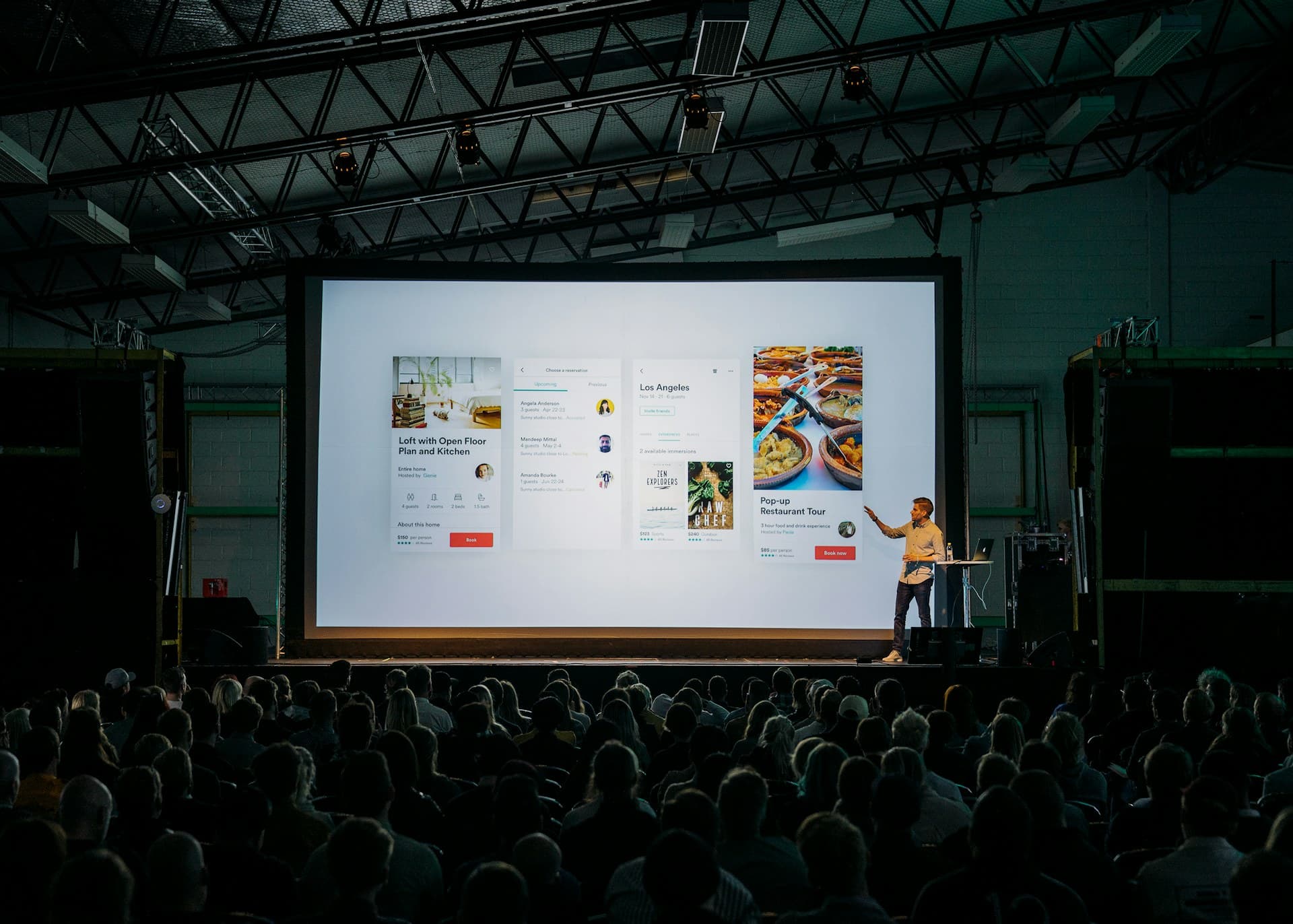
How to plan conference photography is a question organisers usually reach at the point where the venue is booked, the speakers are confirmed and the programme has gone to print. The photographer is the last line on the list.
The problem is that event photography is the one position you cannot run a second time. Room acoustics can be fixed, catering can be rescheduled, a speaker can be given more time. A moment that was not photographed simply no longer exists. Below are the decisions that need to be made before the day itself.
What has to be decided two weeks ahead
A photographer does not need "coverage of the conference". They need answers to three specific questions, and you already have all three while you are building the programme:
- Which moments are mandatory: the opening, a particular speaker, a signing ceremony, an awards slot. This list matters more than the programme itself.
- Whose portrait you need, and which part of the programme leaves that person free. A speaker who has stepped off stage and is getting into a taxi cannot be photographed.
- Where the photographs will be used: social media, a press release, next year's promotional material. Format determines framing.
The third point is the one most often forgotten. A frame composed horizontally gets cropped in Stories and Reels (9:16); a vertical one will not fit a press release. For the feed, 4:5 or 3:4 is the safe ratio today, and a LinkedIn portrait has to survive a square crop. When we know this in advance, the key moments are shot in both orientations with margin left at the edges.
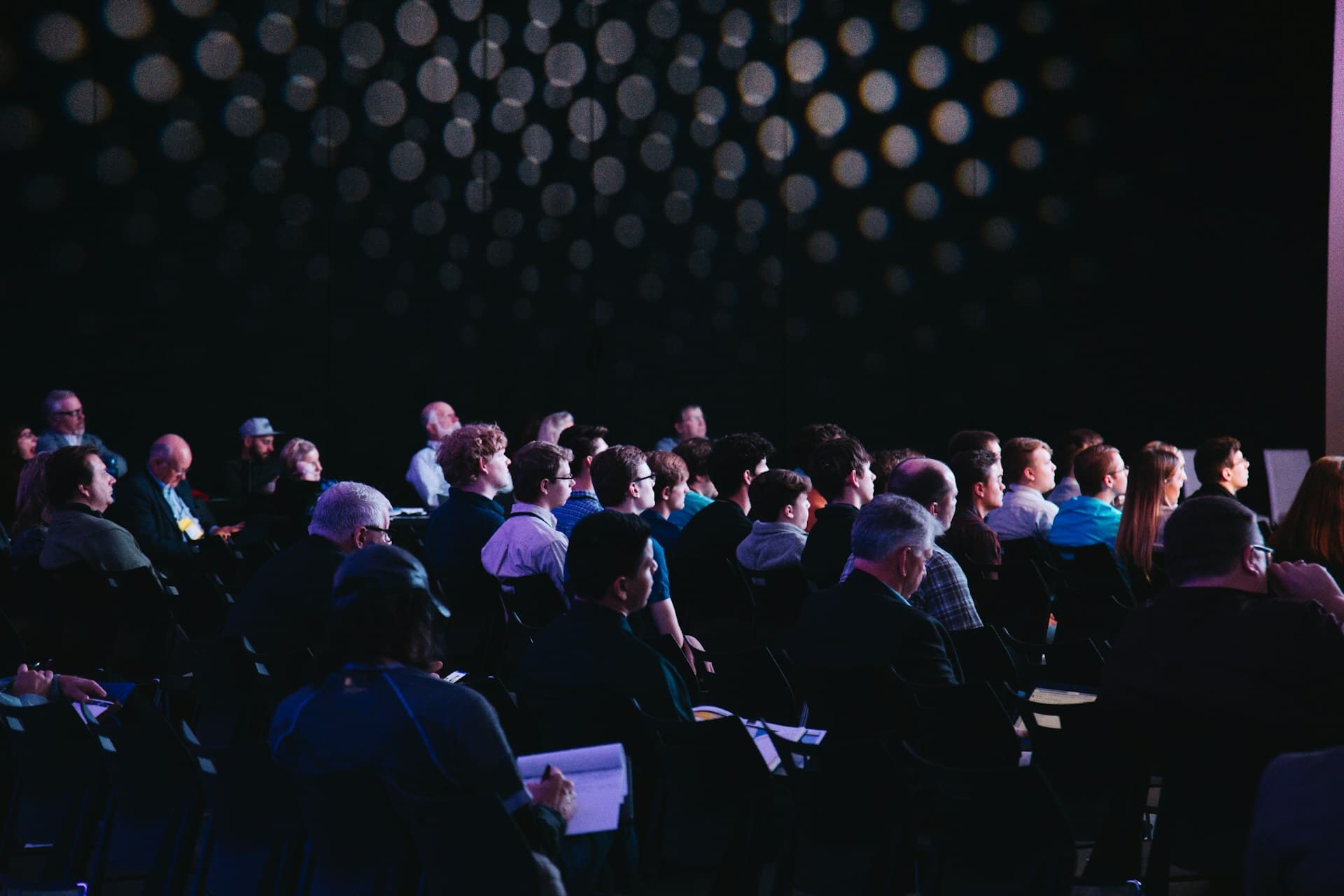
Conference photography: how many photographers you need
One photographer stands in one place. If the programme runs parallel sessions, the choice is simple: either two photographers, or a priority decided in advance.
In our experience one photographer comfortably covers a single-hall event across four to eight hours. A second is needed when two things happen at once: parallel sessions, or when the networking side has to be documented as fully as the stage. The exact number is agreed in advance, based on the programme, the space and the coverage you want.
The networking part deserves its own note: coffee breaks, registration, conversations in the corridor. That is where the living frames come from, the ones used in next year's promotion. But if the photographer is tied to the stage the whole time, that material never appears. So the programme should say in advance which block the photographer moves from the hall to the foyer.
Conference photography means four to eight hours on site and delivers 150 to 400 retouched photographs. The count is deliberately given as a range: an eight-hour forum across three sessions and a four-hour presentation cannot produce the same set.
The speaker portrait that outlives the event
A speaker photographed on stage is good for the report. But the frame that person will later put on LinkedIn and send to the next conference committee is not born on stage.
So we offer organisers a separate, short window: one corner of the venue, a clean background, professional lighting. Ten minutes per speaker is enough. It is effectively a business portrait made on the day of the event, with no separate session required.
A practical detail: schedule that window during registration or a coffee break, not at the end of the programme when everyone is already leaving.
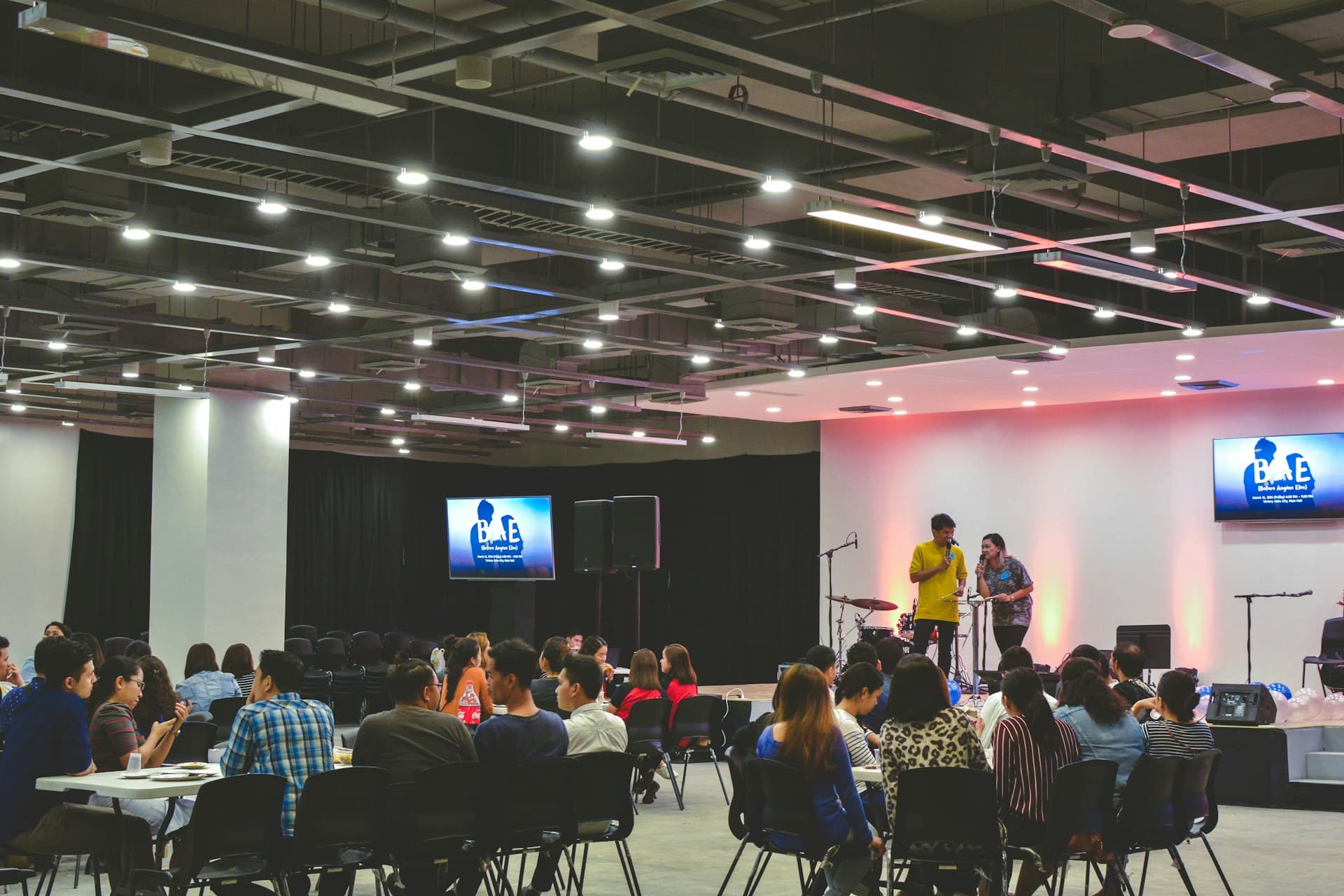
The technical side matters too. A conference hall is the hardest kind of space for light: warm bulbs in the ceiling, coloured spots on stage, a cold LED screen behind. All three colour temperatures land in the same frame, which is why faces come out yellowish in one shot and bluish in the next. We correct this on location with additional neutral light rather than in retouching alone, because fully rebuilding colour afterwards costs image quality.
Sponsors, branding and what gets remembered last
The client receives the photographs and calls the next day: the sponsor logo is nowhere to be seen.
That is almost always a communication gap rather than the photographer's. Documenting branding is a separate task and it needs a list. Before the shoot, send us:
- The sponsors in order of priority
- Where each logo sits: banner, stage screen, registration desk, gift bag
- The key guests the photographer needs to be able to recognise
- Any restricted areas: a closed session, a part not open to press
Those four points fit in one email and change the result sharply. The same rule applies to corporate event photography.
Same day, or the full set
Conference photography has two different deadlines and they do not replace one another.
The first is the express set for social media: during the event itself we process five to ten frames and hand them to your SMM team. This is the material that is still news, published from the hall.
The second is the full retouched archive: full-resolution files in an online gallery, within seven to ten working days. Here colours are matched, frames are cropped and the selection is made. This material goes into the annual report, the presentation deck and the promotion of the next event.
If the event also has an online audience, live streaming is a separate discipline: multi-camera switching, presentation integration and a recording file afterwards.
What the price covers
Conference photography starts at 800 GEL. The price covers coverage of the agreed programme, individual speaker portraits, panel and audience frames, documentation of branding and sponsors, 150 to 400 retouched photographs, an express set for social media and a commercial licence.
That last point is often the most important one for a business: you hold full rights to the digital files, for advertising, your website, print and a sponsor report. The only thing we ask is permission to use a frame in our portfolio, and only with your written consent.
If the event is held in an unfamiliar space, we ask the client for a site visit beforehand and agree it when the booking is made. Being there in person reveals what a floor plan cannot: where extra light is needed, where the camera stands, and from which point the stage and the audience are both visible at once.