Blog
How to Choose a Photographer for a Sports Competition
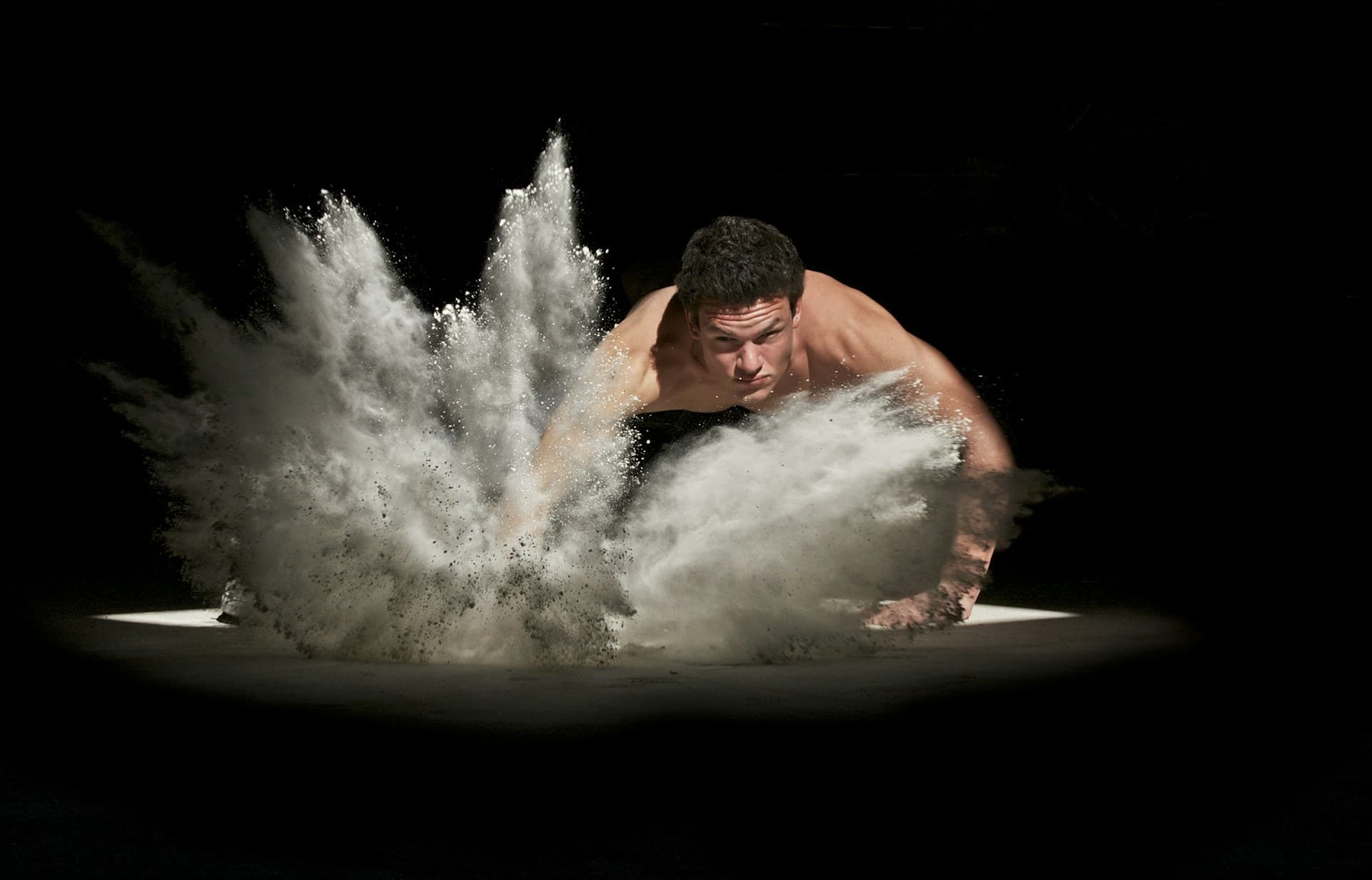
How to choose a photographer for a sports competition is a question organisers usually face while holding two quotes side by side. Both say the same thing: "full coverage", "professional equipment", "edited photographs". The price differs by a factor of two.
The problem is that sports is the one genre where the mistake happens in a single second. A portrait can be retaken; you can wait for a conference speaker. The moment someone crosses the finish line exists exactly once. Below are the five criteria that let you compare offers by something other than price.
What experience a sports photographer needs
Everyone has good frames in a portfolio. What matters is something else: is your sport in there.
Basketball and chess do not demand the same skill. A swimming pool, with its light, reflections and humidity, is an entirely different problem from an open stadium at midday. In a wrestling hall the photographer sits at the edge of the mat and has to anticipate the movement, otherwise the frame contains a back.
So instead of a portfolio, ask for one complete competition gallery: not ten selected frames but a whole event from beginning to end. That is where you see whether the quality is even, rather than only the highlights.
A second sign of experience: does the photographer know the rules of your sport. Someone who knows where the ball will go and when the decisive moment starts aims the camera in advance. Someone who does not works by reaction and is always half a second late. The difference shows immediately in a portfolio: in an experienced photographer's frames the athlete sits in the centre and there is space left in the direction of movement.
Which technical capabilities to check
This is where organisers get lost, because photographers answer with camera model names. The name of a camera means nothing by itself. What matters is what it can do in your conditions.
Ask three questions about concrete numbers:
- At what ISO do you work under training-hall light, and how much noise does that give? This tells you whether the photographs will hold up in print or only on screen.
- How many frames per second do you shoot, and how long does the buffer last? Burst shooting only helps if the camera does not stall mid-sequence.
- Do you bring a backup body and batteries? A six-hour tournament without spare equipment is a risk.
One detail that is often forgotten: shutter noise. At a chess tournament or a shooting range, silent mode is not a comfort, it is a requirement.
How to assess coverage
"Full coverage" is the vaguest phrase in any quote. To one photographer it means one court; to another, the whole tournament.
Put three things in writing:
- How many courts or arenas run in parallel. One photographer stands in one place; if three matches run at once, you need either a second camera or a priority agreed in advance.
- Whether you need every participant or only the medallists. If each athlete needs at least one good frame, that changes the entire shooting logic.
- Whether the awards ceremony is included. It usually comes last, and that is exactly where the agreed hours run out.
How to compare two quotes in practice
When both quotes say "full coverage", the only thing left to compare is price. That is the worst possible criterion.
The practical method is simple: ask both to answer four numbers in the same format. How many hours, how many photographers, how many edited photographs, and in how many days. Once those four numbers stand next to each other the difference speaks for itself: one offers four hours and a hundred frames for 600 GEL, the other eight hours, two photographers and 250 frames for 1200. Those are two comparable numbers rather than two slogans.
A second method: ask both to name two recent competitions they worked and give you the client's contact. Whoever hesitates has already answered.
What the price, deadlines and licence must state
Sports event photography starts at 600 GEL and covers three to six hours. The price includes coverage of the competition, 100 to 250 retouched photographs, dynamic action frames, individual athlete photographs, the awards ceremony and a commercial licence.
Retouched photographs arrive within five to seven working days.
A commercial licence matters especially in sport: the photographs go into a sponsor report, a federation website and the promotion of the next tournament. It is included in our price, which means you will not need a further agreement for that use.
If the event is at an open stadium and you need an overall view, drone photography is a separate discipline. If the tournament has a staged opening or closing, that part follows the logic of concert photography rather than sport.
Which questions to ask before booking
This list fits in one email and makes quotes genuinely comparable:
- Does your portfolio contain a complete gallery from my sport?
- How many photographers will come, and which zones will each cover?
- How many edited photographs will I receive, and within what time?
- Will every participant appear in at least one frame?
- Who holds the usage rights to the photographs, and on what terms?
The answer to the fifth question has to be in writing. A verbal agreement becomes a problem at the moment a sponsor uses a photograph in their own advertising.
Choosing in Tbilisi
Two extra steps work in the local context. First, ask the photographer for a gallery from a Georgian competition rather than frames from a foreign tournament: the lighting and scale of our halls are different. Second, ask whether they have worked at the specific venue where your tournament is held; someone who knows the space will not lose time finding positions.
Emma Studio is on 29 Zovreti Street and works on location at events across Tbilisi. A visit to the venue beforehand is agreed when the booking is made.
The general planning principles that apply to any multi-hour event are written up separately: conference photography.
In the end the choice is rarely between a good and a bad photographer. More often it is between someone who knows the logic of your competition and someone who shoots well but is meeting your sport for the first time. That difference does not appear in a quote. It only shows up in the questions you ask.